Fleet GPS Data Ownership, Retention & Portability Guide
Jul 15, 2026•6m
A safety manager gets a call about a collision from eight months ago — an insurer is disputing fault, and the only thing that settles it is the vehicle's stop, start, and speed record from that afternoon. The team opens the platform expecting the trip to be there. Sometimes it is. Sometimes the history window closed months earlier, or the data is retained, but the report won't export in the format the insurer's adjuster will accept, or the fleet switched providers last year and that period now lives in a system no one can log into anymore.
That moment, needing a specific slice of history and finding out only then whether it's still reachable, is where data governance stops being theoretical. Stop/start and trip records are routinely used for driver exoneration and incident reconstruction when disputes arise, so it's wise to treat several years of history as table-stakes for investigations and audits. But whether that history is available when you reach for it is decided long before the call comes — by retention windows, export capabilities, and what access survives a provider change. This guide walks through those mechanics, so the answer is settled in advance, not discovered under pressure.
Key observations
- "Owning your data" and "being able to use your data" are different things. Most fleet GPS data is generated by your devices but stored and processed inside a provider's platform, so your practical control depends on three mechanics:
- how long data is retained
- how it can be exported
- what access you keep after the relationship ends
- Retention windows vary more than almost any other structural field. Across major providers, standard telematics retention ranges from a few months to several years, with several providers not publishing a figure at all and some treating longer history as a contract-dependent or add-on item.
- The hardest data to replace is historical trend data. Raw location points may export cleanly, but the multi-year patterns you've accumulated — and that support audits, disputes, and operational review — generally do not transfer when you switch.
- Some moments you most need an export (an audit, an incident dispute, a provider change) are unanticipated. Having the data to hand when they arise can save needless headaches.
- For most readers, this is a planning topic, not an action item. Nothing here requires switching or acting today.
How fleet GPS data is created and controlled
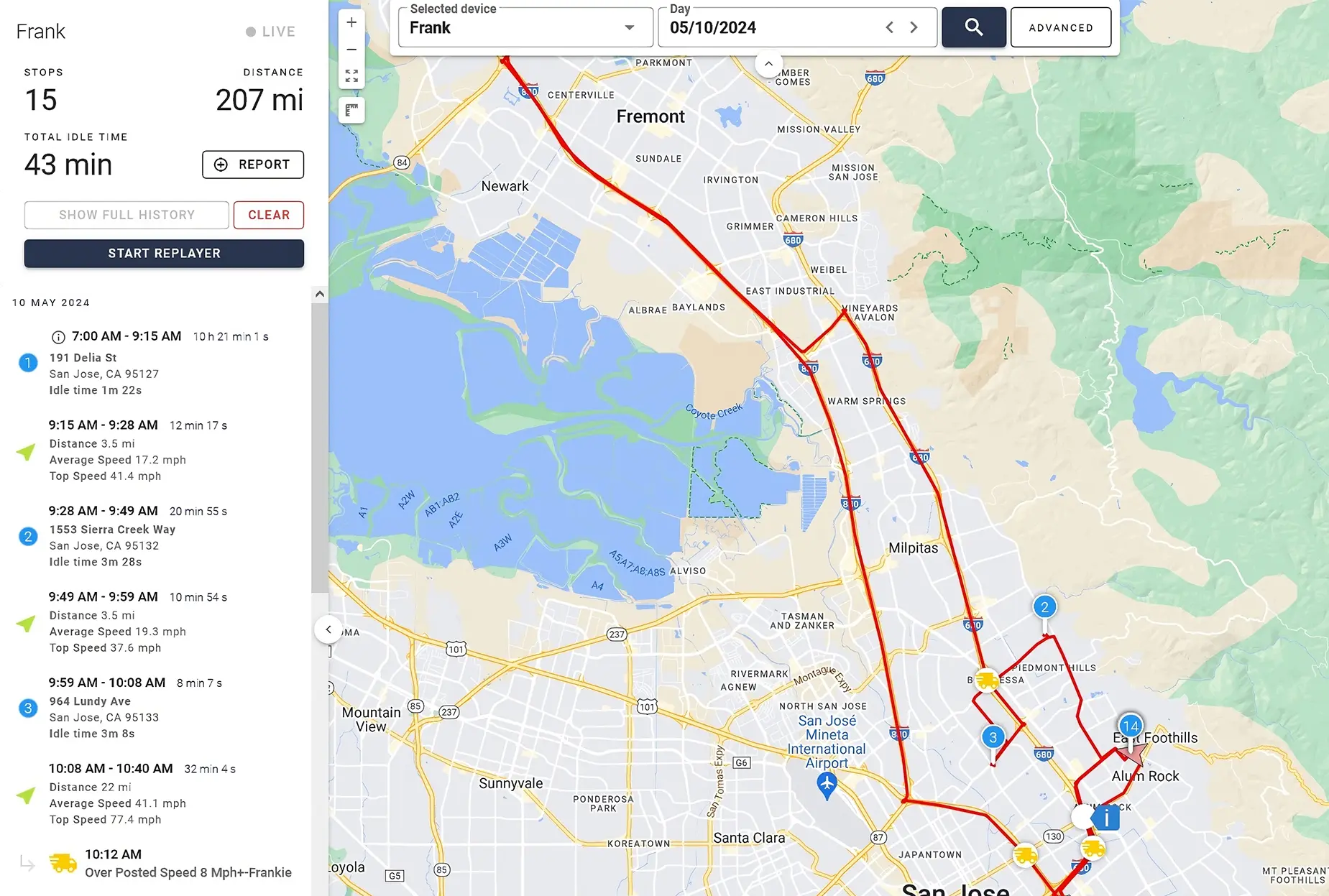
Your devices generate location, trip, diagnostic, and (where equipped) video data continuously. That data is transmitted to the provider's cloud, where it's stored, processed into reports, and made available through the platform. Fleets consistently treat several years of this history as table-stakes for investigations, audits, and operational review, and stop/start and trip records are frequently used for driver exoneration and incident reconstruction when a dispute arises.
In practice, the control you have over that data is exercised through platform mechanics rather than an abstract ownership status — role-based access control, audit logging, encryption at rest, and stated data-minimization and retention policies. These govern who can see, export, and act on the data day to day.
Retention and access constraints
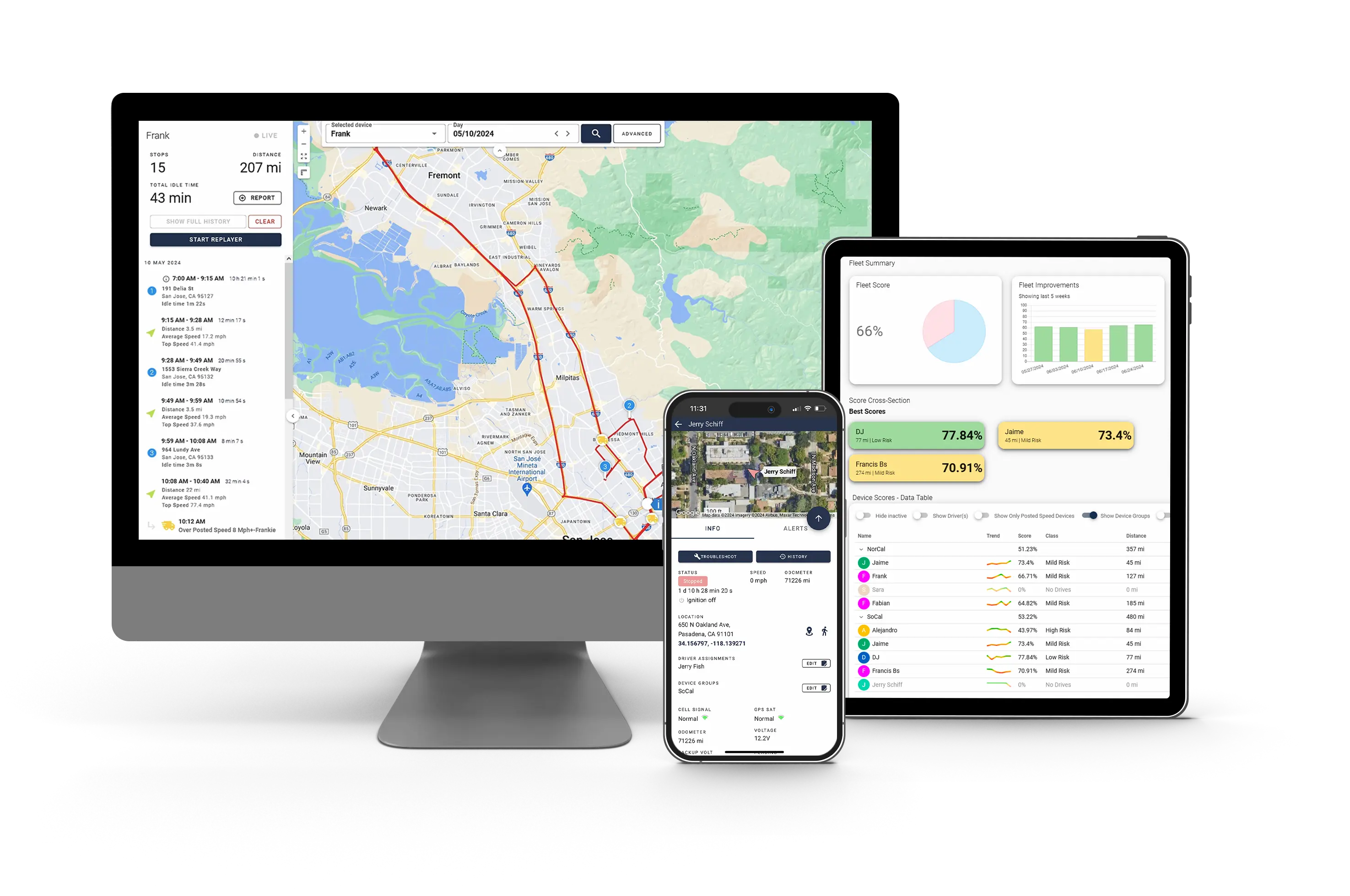
Retention is one of the dimensions where providers diverge most. Telematics retention and video retention are usually governed separately, and video is almost always the shorter of the two — a detail that may surprise fleets after deployment.
With some providers, longer history is billed as an add-on rather than included — one of the "cost escalators" fleets encounter only after onboarding. So, retention should be read in three tiers: standard (included), extended (configurable), and add-on (billed).
The following figures are structural data points on retention, presented for reference only:
| Provider | Stated telematics data retention |
|---|---|
| One Step GPS | 3 years, included, no additional fee; video stored for no less than 13 months — longer retention is available if needed |
| Verizon Connect | 1-3 years, depends on service tier |
| Samsara | Up to 48 months, configurable; pricing not public |
| Geotab | Indefinite; users notified of purges, ~2-year minimum retained |
| Teletrac Navman | 13 months; extensions via support |
| Powerfleet (Fleet Complete) | 60 months default; video ~8 months; configurable |
| GPS Insight | 13 months; video ~4 months; extension terms unclear |
| Webfleet | 3 months core logs; logs/reports up to 3 years |
| Linxup | Not publicly specified; video ~60 days |
| Motive / Azuga / GPS Trackit / Momentum IoT | Term uncertain or governed by contract; no published figures found |
Portability and export mechanics
Portability has two layers and fleets tend to plan for only the first.
The first layer is standard reporting and access — the audit-ready records compliance and finance teams reach for routinely, and the single-platform combination of live map, history, and reporting that reduces reconciliation work. The second layer is programmatic export via API. An open API makes it feasible to pull data into proprietary or in-house systems, but it presumes you have the technical resources to use it.
Most major providers publish an open API, near universal among the top providers, with isolated exceptions. Some also document webhooks and inbound OEM data porting (John Deere JDLink, VisionLink, Stellantis).
The friction points worth naming: even where raw data exports cleanly, the multi-year trend history you've built generally does not move with it. A new platform starts your history over. For fleets that rely on long-range patterns for audits or disputes, that continuity gap — not the file export itself — is a real portability constraint.
What happens to your data after cancellation
Two things end together at cancellation: platform access and, in most loaned hardware models, possession of the device. Return logistics and any final-billing mechanics are provider-specific, but the constant across providers is that access to the data in the platform generally ceases when the subscription ends.
A useful distinction here is hardware data coupling. Whether hardware is loaned or purchased changes who keeps the device, but it generally does not change where the data lives — the records sit in the platform regardless of who owns the box. Owning the hardware does not, on its own, preserve access to historical data once the subscription ends.
Deletion timelines after cancellation are often not publicly documented and differ by provider. The planning principle is simple and provider-agnostic: export what you need to keep while the subscription is still active.
What to confirm with your provider
- What is the standard retention period for telematics data and is video retained on a separate (usually shorter) schedule?
- Is longer retention available, and is it included, configurable, or billed as an add-on?
- What export formats are available — report downloads, raw data files, or API access — and is the API included?
- Does an export include historical trend and analytics data, or only raw records?
- After cancellation, how long does data remain accessible or recoverable, and when is it deleted?
- Under the platform's access controls, who on our team holds export rights?
Lifecycle alignment: when to act
For most fleets reading this mid-contract, no action is required now. The work is documentation, not switching.- Mid-contract (cannot act now): confirm your plan's retention window, whether video is retained separately, and what export paths exist. Build a simple internal record of what data matters and where it would need to go.
- Approaching renewal (roughly 6-12 months out): use the window to verify export mechanics in writing and capture anything you'd want to preserve before terms reset. Suggested resource: a migration guide.
- Actively switching: sequence your export before access ends and treat trend-history continuity as a known gap.
Author

Nico Photos
Customer Insights Manager
Table of Contents
Start using One Step GPS
Enterprise-grade fleet tracking, $13.95/mo, no contracts
100-day money back guarantee
Lifetime warranty
1-30 second updating
4G LTE Equipment



★★★★ ★ ★
4.9 / 5 Serving over 20,000 fleets
20,000+ of the world's fleets are monitored with One Step GPS




























Author
Nico Photos
Customer Insights Manager
Nico is obsessed with how One Step GPS customers use and derive value from our platform and devices. He regularly conducts interviews with fleets of all shapes and sizes to document the problems they're facing, their needs, and the tools and solutions that help make their lives easier.